
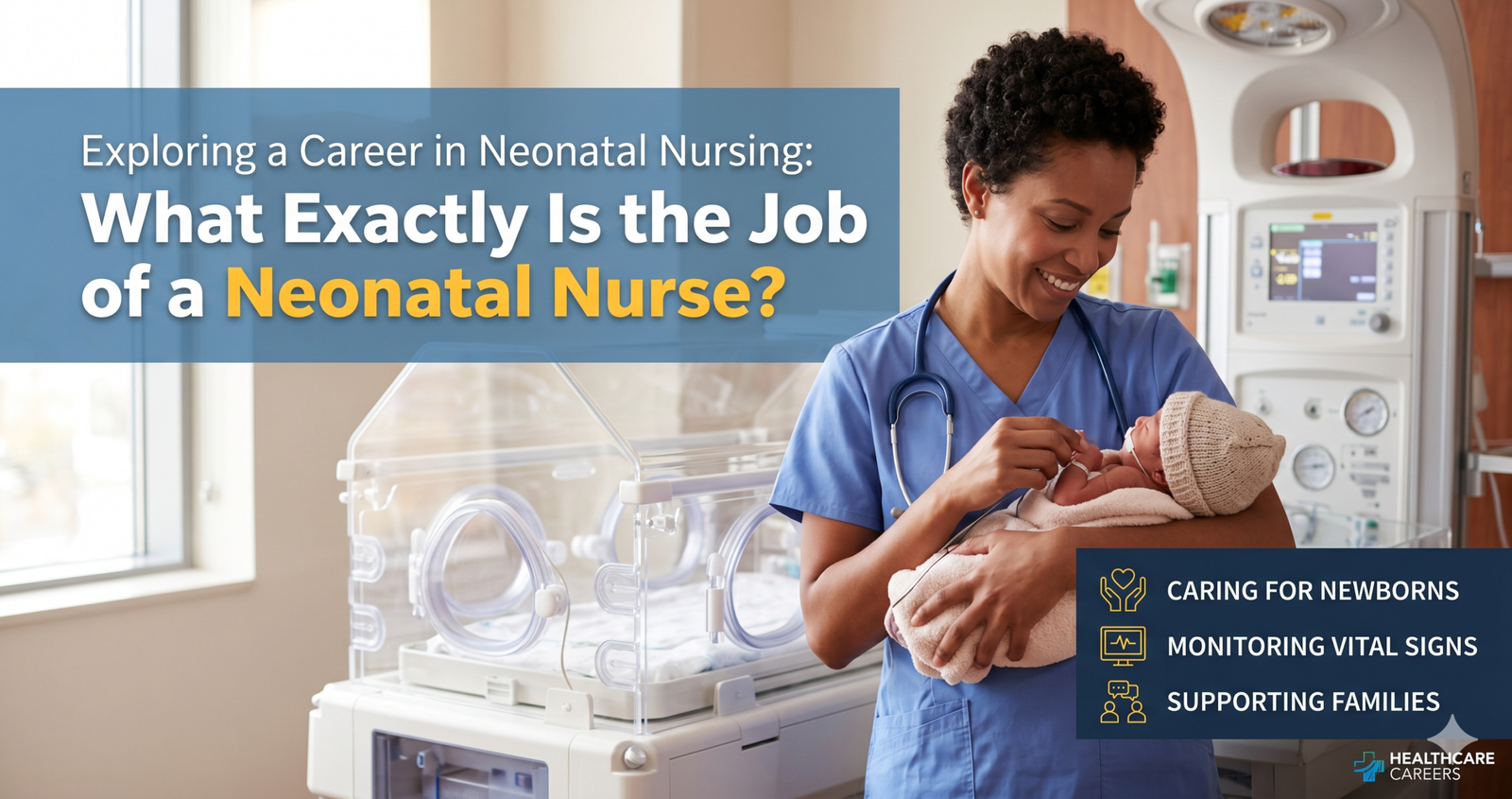
How Exploring a Career in Neonatal Nursing: What Exactly Is the Job of a Neonatal Nurse? A neonatal nurse is a highly specialized registered nurse (RN) who cares for newborn infants experiencing health complications like prematurity, birth defects, or critical illnesses
What Exactly Is the Job of a Neonatal Nurse? Exploring a Career in Neonatal Nursing
Introduction
Few healthcare roles are as deeply meaningful – or as clinically demanding – as neonatal nursing. If you are considering a career in neonatal nursing, you have taken your first step into one of the most technically and emotionally specialized fields of modern healthcare. Neonatal nurse’s care for the most vulnerable patients imaginable: newborns that arrive too early, are too small, or are too sick to thrive without expert intervention.
From the moment a high-risk newborn is admitted to the neonatal intensive care unit (NICU), these highly trained professionals become the main line of support – for the baby and for the family. This guide details everything you need to know about this remarkable major. What does a neonatal nurse actually do? The daily responsibilities of a neonatal nurse go beyond the usual care of newborns. These professionals work in fast-paced, high-stakes environments where clinical precision and compassionate communication must coexist in harmony.
Monitor and stabilize critically ill infants
Neonatal nurses continuously monitor vital signs, including heart rate, oxygen saturation, temperature, and breathing rate. They are trained to recognize subtle warning signs that a newborn’s condition is deteriorating, often before the alarm sounds. This level of alertness is what sets NICU nursing apart from postpartum care in general.
Medication management and specialized treatment
Neonatal nurses are responsible for calculating and administering medications with precision appropriate to extremely small body weights, sometimes less than 500 grams. They administer intravenous lines, administer respiratory treatments and assist with procedures such as intubation and umbilical catheterization. Accuracy in this environment is not optional; it saves lives.
Family support in times of crisis
Emotional labor is equally important. Neonatal nurses serve as educators, advocates, and emotional anchors for often fearful and overwhelmed parents. They teach families how to participate in their child’s care through activities such as skin-to-skin contact, also known as kangaroo care, and guide parents toward realistic and well-informed expectations.
Educational pathways to explore a career in neonatal nursing
Entering this specialty requires a solid educational foundation combined with deliberate clinical training. Luckily, there are several paths available depending on where you are in your nursing journey.
Earn your RN license
The starting point for exploring a career in neonatal nursing is to earn a registered nurse (RN) license, either through an associate degree in nursing (ADN) or a bachelor of science in nursing (BSN) degree. Today, most NICUs specifically prefer or require a BSN, especially for Level III and IV units that treat the sickest newborns. The BSN provides a deeper foundation in research, leadership, and evidence-based practice – all essential skills in neonatal care.
Gaining NICU Experience
After obtaining their license, most aspiring neonatal nurses seek entry-level positions in the NICU through new post-graduate residency programs. These structured programs pair novice nurses with experienced NICU mentors and provide supervised clinical exposure to premature and critically ill infants. Typically, a new NICU nurse will spend six months to a year in orientation before working independently.
Obtained neonatal nursing certification
Once you have accumulated enough clinical hours, earning the Registered Nurse designation (RNC-NIC) through the National Certification Corporation (NCC) is an important step in your career. Certifications validate your expertise, increase your professional credibility, and often lead to higher salaries. Many hospitals actively support and financially encourage nurses to pursue this designation.
Basic skills that neonatal nurses should develop
Exploring a career in neonatal nursing means honestly assessing whether you possess – or are willing to develop – a very specific set of clinical and interpersonal skills.
Clinical and technical competence
Neonatal nurses must be proficient in the use of complex equipment, including mechanical ventilators, phototherapy devices, and infusion pumps calibrated for micro dosing. They should also understand the pathophysiology of common neonatal conditions such as respiratory distress syndrome (RDS), hyperbilirubinemia, necrotizing enterocolitis (NEC), and intraventricular hemorrhage (IVH). A strong neonatal pharmacological imperative is also non-negotiable.
Emotional resilience and stress management
The NICU environment, while rewarding, places a significant emotional burden on nurses. Not all newborns survive, and witnessing this reality requires true resilience. Effective neonatal nurses develop healthy coping strategies, rely on peer support systems, and practice self-care intentionally. Compassion fatigue is a real occupational hazard, and recognizing its signs early is a career skill.
Family-centered communication and care
Neonatal nurses work in interdisciplinary teams that include neonatologists, respiratory therapists, social workers, and lactation consultants. Clear and concise communication between these groups is essential. Additionally, delivering difficult news with empathy and clarity – as well as translating complex medical terminology into language parents can understand – is a skill that takes time and deliberate practice to master. Working environment and opportunities for specialization
Although the NICU is the primary workplace for neonatal nurses, an exploration of the neonatal nursing profession reveals a surprising variety of settings and subspecialties.
NICU Levels and What They Mean
NICUs are classified into four levels by the American Academy of Pediatrics. Level I units provide basic care for newborns, while Level IV units provide the most complex care, including surgical procedures for birth defects and management of the most critically premature infants. Working in a higher level NICU often requires skills that are more advanced and provides broader clinical exposure.
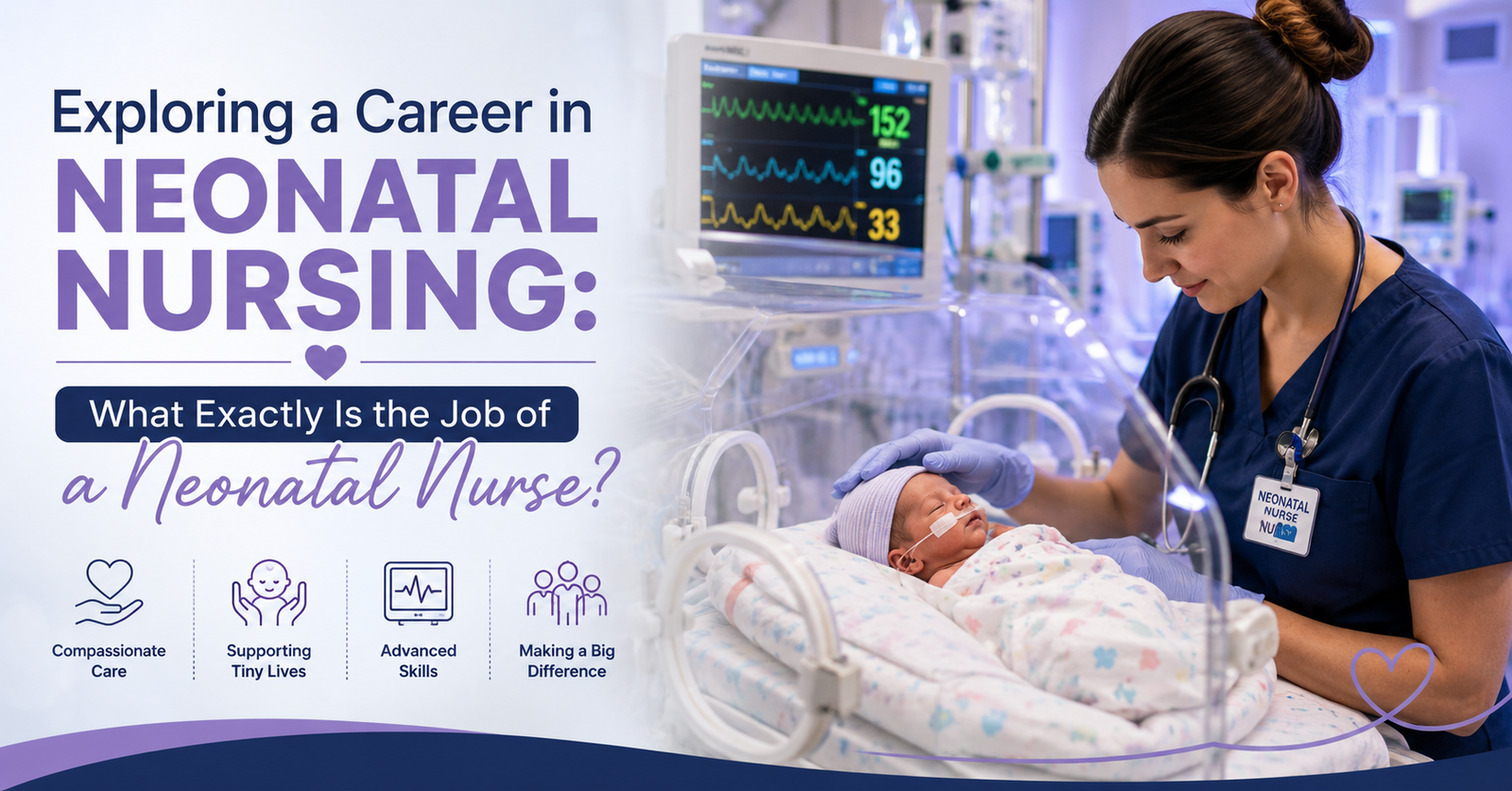
Transport and Outreach Nursing
Some neonatal nurses specialize in neonatal transport, accompanying significantly sick newborns in the course of floor or air transfers among facilities. This excessive-autonomy position calls for superior evaluation abilities and the capacity to control emergencies with minimum instantaneous backup. It is one of the maximum adrenaline-charged niches in the strong point.
Advanced Practice in Neonatal Care
Nurses who want to improve similarly can pursue a Master of Science in Nursing (MSN) or Doctor of Nursing Practice (DNP) to turn out to be Neonatal Nurse Practitioners (NNPs). NNPs characteristic with an excessive diploma of scientific independence, appearing in bodily examinations, ordering diagnostic tests, and dealing with complicated neonatal sufferers beneath doctor collaboration. This superior position represents the top of exploring a profession in neonatal nursing.
Salary, Job Outlook, and Career Longevity
Neonatal nursing is not handiest individually fulfilling — it is also a professionally solid and financially aggressive profession choice.
What Neonatal Nurses Earn
According to current statistics from the U.S. Bureau of Labor Statistics and strong point income surveys, neonatal nurses commonly earn among $70,000 and $100,000 annually, with NICU nurses in excessive-value metropolitan regions or the ones keeping superior certifications incomes drastically more. Overtime possibilities and shift differentials in 24/7 NICU environments can similarly complement base compensation.
Growing Demand for NICU Nurses
The call for professional neonatal nurses keeps developing along with growing charges of untimely births and an increasing populace of medically complicated neonates surviving because of technological advances. Healthcare staff analysts always perceive NICU nursing as one of the maximum solid strong point nursing roles within the process market. For new graduates in search of long-time period process security, that is a significant consideration.
Longevity and Career Satisfaction
Research in nursing literature always suggests that NICU nurses record excessive ranges of expert satisfaction, regularly attributing their durability within the subject to the deep bonds they shape with households and the privilege of witnessing the resilience of tiny sufferers who beat wonderful odds. That feel of reason is, for many, irreplaceable.
Conclusion
Exploring a profession in neonatal nursing is extra than deciding on a medical forte — its miles deciding on a calling. It needs notable technical skill, profound emotional fortitude, and an unwavering dedication to advocating for sufferers who cannot talk for themselves. Whether you are a nursing pupil mapping out your destiny or a skilled RN thinking about a forte transition, neonatal nursing gives a professional route described through meaning, growth, and impact.
If this put up resonated with you, percentage it with a fellow nursing pupil or colleague who is probably thinking about this route. We would additionally like to pay attention to you — drop a remark beneath sharing what attracts you to neonatal nursing, or discover our associated sources on NICU certifications and superior neonatal exercise programs.
FAQ
What qualifications do I want for exploring a profession in neonatal nursing?
To start exploring a profession in neonatal nursing, you want at minimal an energetic RN license, ideally supported through a BSN diploma. Most NICUs additionally require crowning glory of based new-graduate residency software and, over time, strongly inspire the RNC-NIC certification via the National Certification Corporation.
How lengthy does it take to end up a neonatal nurse?
The timeline varies primarily based totally on your academic route. An ADN takes about a few years, whilst a BSN takes 4 years. After licensure, NICU orientation usually provides some other six to one year earlier than you exercise independently. Obtaining forte certification usually calls for at the very least years of NICU medical experience.
Is neonatal nursing emotionally difficult?
Yes — it is miles one of the maximum emotionally extensive nursing specialties. Neonatal nurses frequently navigate their own circle of relatives crises, end-of-lifestyle situations, and extended high-stakes caregiving. However, many nurses on this subject describe the emotional intensity of the paintings as its finest strength, noting that assisting households via their maximum inclined moments is profoundly rewarding.
What is the distinction among a neonatal nurse and a neonatal nurse practitioner?
A neonatal nurse (RN) gives bedside care which include monitoring, medicinal drug administration, and own circle of relatives schooling below medical doctor oversight. A Neonatal Nurse Practitioner (NNP) holds a complicated graduate diploma and works with extra medical autonomy — appearing assessments, ordering tests, and coping with neonatal affected person care in collaboration with neonatologists. Transitioning from RN to NNP calls for finishing MSN or DNP software with an NNP track.
Read More:
https://nurseseducator.com/didactic-and-dialectic-teaching-rationale-for-team-based-learning/
https://nurseseducator.com/high-fidelity-simulation-use-in-nursing-education/
First NCLEX Exam Center In Pakistan From Lahore (Mall of Lahore) to the Global Nursing
Categories of Journals: W, X, Y and Z Category Journal In Nursing Education
AI in Healthcare Content Creation: A Double-Edged Sword and Scary
Social Links:
https://www.facebook.com/nurseseducator/
https://www.instagram.com/nurseseducator/
https://www.pinterest.com/NursesEducator/
https://www.linkedin.com/company/nurseseducator/
https://www.linkedin.com/in/afzalaldin/
https://www.researchgate.net/profile/Afza-Lal-Din
https://scholar.google.com/citations?hl=en&user=F0XY9vQAAAAJ
2 thoughts on “Exploring a Career in Neonatal Nursing: What Exactly Is the Job of a Neonatal Nurse? ”