
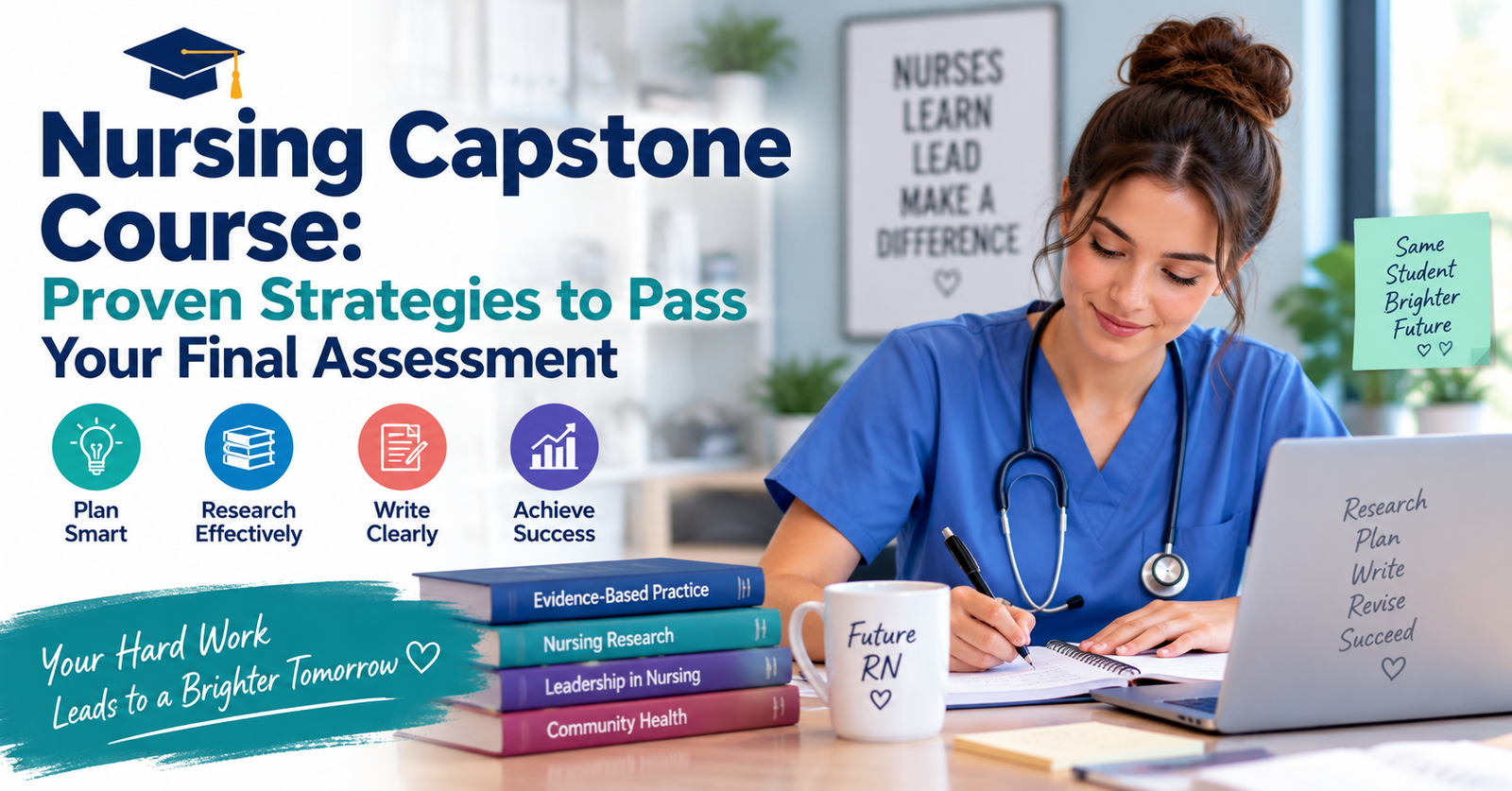
Master your Nursing Capstone Course: Proven Strategies to Pass Your Final Assessment. Nursing Capstone course with proven strategies to pass your final assessment and finish your program with confidence.
Proven Strategies to Pass Your Final Assessment: Nursing Capstone Course
Introduction
Successfully completing your nursing capstone course requires more than clinical knowledge; it demands strategy, organization, and consistent effort. This final assessment often determines whether you graduate on schedule, which makes a focused approach essential.
For nursing students entering this final phase, the pressure can feel intense. Fortunately, proven strategies exist to help you approach your capstone course with clarity and confidence rather than anxiety.
Understanding What Your Capstone Course Evaluates
Before building a study strategy, it helps to understand exactly what faculty are assessing.
Application for Clinical Knowledge
Your nursing capstone course typically evaluates how well you apply theoretical concepts to real clinical scenarios. This differs significantly from standard exams, since the focus shifts toward synthesis rather than memorization.
Critical Thinking and Clinical Judgment
Faculty are often looking for evidence of sound clinical reasoning throughout your project or assessment. Demonstrating how you weigh evidence and make decisions matters just as much as reaching the correct conclusion.
Professional Communication Skills
Many capstone assessments also evaluate written and verbal communication, since these skills are essential in professional nursing practice. Clear, organized writing and confident presentation delivery both factor into your final evaluation.
Building a Study and Preparation Timeline
A structured timeline is one of the most effective tools for reducing capstone-related stress.
Breaking the Course into Milestones
Rather than viewing your capstone course as one massive undertaking, break it into smaller milestones such as proposal submission, literature review, and final defense. This approach makes steady progress feel far more achievable.
Scheduling Regular Review Sessions
Set aside dedicated weekly time to review course material and project progress rather than cramming before deadlines. Consistent, spaced review has been shown to improve long-term retention compared to last-minute studying.
Building in Buffer Time
Unexpected clinical shifts, family obligations, or technical issues can derail even the best-laid plans. Building buffer time into your timeline protects you from unnecessary panic when life inevitably interferes.
Study Strategies That Actually Work
Not all study methods are equally effective for capstone-level material, so choosing the right approach matters.
Practice With Case Studies
Working through realistic clinical case studies helps bridge the gap between theoretical knowledge and practical application. This strategy mirrors exactly what most capstone assessments require you to demonstrate.
Form a Study Group
Collaborating with classmates allows you to discuss complex concepts from multiple perspectives. Additionally, explaining material to peers is one of the most effective ways to solidify your own understanding.
Use Active Recall Techniques
Rather than simply rereading notes, test yourself regularly using flashcards or practice questions. Active recall strengthens memory far more effectively than passive review methods.
Preparing for Your Final Assessment
The final assessment itself requires targeted preparation beyond general coursework review.
Reviewing Assessment Criteria Carefully
Request detailed rubric or grading criteria from your instructor well before the assessment date. Understanding exactly how you’ll be evaluated allows you to focus your preparation efforts where they matter most.
Simulating Assessment Conditions
If your final assessment includes a presentation or oral defense, practice under conditions similar to the real event. Rehearsing in front of peers or family members helps reduce anxiety and improve your delivery.
Preparing for Common Faculty Questions
Faculty often probe your reasoning behind clinical decisions, methodology choices, and how findings apply to broader practice. Preparing thoughtful responses in advance helps you answer confidently rather than freezing under pressure.
Managing Stress and Avoiding Burnout
Your final capstone course often coincides with job searching, licensing exam prep, and personal responsibilities, making stress management critical.
Prioritizing Self-Care
Adequate sleep, nutrition, and physical activity directly impact cognitive performance and information retention. Neglecting these basics during your capstone course often backfires despite feeling like time saved.
Leaning on Your Support System
Whether it’s classmates, family, or faculty advisors, don’t hesitate to lean on your support system during this demanding period. Isolation tends to amplify stress, while connection often makes challenges feel more manageable.
Recognizing When to Ask for Help
If you’re genuinely struggling with course material or personal circumstances, reach out to your academic advisor early rather than wait until problems escalate. Most nursing programs have resources specifically designed to support students through capstone challenges.
Conclusion
Passing your nursing capstone course comes down to consistent preparation, smart study strategies, and proactive stress management rather than last-minute effort. By breaking your timeline into manageable milestones, practicing with realistic case studies, and understanding exactly how you’ll be assessed, you’ll approach your final evaluation with genuine confidence.
If these strategies resonated with you, share this guide with classmates preparing for their own capstone course, leave a comment about what’s helped you most, and explore more of our resources to support you through this final stretch of your nursing education.
FAQs
What does a nursing capstone course typically involve?
A nursing capstone course typically involves a culminating project or assessment that evaluates your ability to apply clinical knowledge, critical thinking, and professional communication skills. It often includes a written component and a final presentation or defense.
How should I start preparing for my nursing Capstone course?
Start by breaking the course into smaller milestones and building a realistic timeline well before major deadlines. Reviewing assessment criteria early also helps you focus your preparation on exactly what faculty will evaluate.
What is the best way to study for a capstone final assessment?
Active recall techniques, practice with realistic case studies, and study groups tend to be more effective than passive review for capstone-level material. Simulating assessment conditions, such as practicing a presentation aloud, also builds confidence.
How can I manage stress during my nursing capstone course?
Prioritizing sleep, nutrition, and physical activity helps maintain the cognitive performance needed for demanding coursework. Leaning on your support system and reaching out to your academic advisor early also prevents stress from escalating into burnout.
Read More:
https://nurseseducator.com/didactic-and-dialectic-teaching-rationale-for-team-based-learning/
https://nurseseducator.com/high-fidelity-simulation-use-in-nursing-education/
First NCLEX Exam Center In Pakistan From Lahore (Mall of Lahore) to the Global Nursing
Categories of Journals: W, X, Y and Z Category Journal In Nursing Education
AI in Healthcare Content Creation: A Double-Edged Sword and Scary
Social Links:
https://www.facebook.com/nurseseducator/
https://www.instagram.com/nurseseducator/
https://www.pinterest.com/NursesEducator/
https://www.linkedin.com/company/nurseseducator/
https://www.linkedin.com/in/afzalaldin/
https://www.researchgate.net/profile/Afza-Lal-Din
https://scholar.google.com/citations?hl=en&user=F0XY9vQAAAAJ