
Explore High-Functioning Autism and Adaptive Skill Development: A Systematic Review. High-functioning autism and adaptive skill development: what the research shows, why the label is contested, and how to support daily living skills.
A Systematic Review: High-Functioning Autism and Adaptive Skill Development
Introduction
A mother once described her son to me this way: “He can explain how a combustion engine works, but he can’t get through a morning without me.” He was fifteen, scored well on cognitive tests, and had been told many times that he was “so high-functioning.” Nobody had asked why he couldn’t manage a shower, a bus pass, or a phone call to the pharmacy. That gap between what a person knows and what a person can do day to day is the heart of this topic.
If you’re researching high-functioning autism and adaptive skill development, you probably want to know why adaptive skills can lag behind intelligence, what the research says about how they develop, and what helps. The short answer is that autistic people without intellectual disability often show a real gap between cognitive ability and everyday functioning, adaptive skills can grow with time and support, and the label “high-functioning” tends to hide exactly the needs that matter most. I’m a nurse educator, not a diagnosing clinician, so use this for understanding and take individual questions to a qualified professional.
Quick Answer
Adaptive behavior means the practical conceptual, social, and daily living skills people use to manage ordinary life. Research on autistic people without intellectual disability commonly reports that adaptive functioning falls below what their cognitive scores would predict, and that this gap can persist into adulthood. Adaptive skills can improve over time, particularly with targeted, individualized support, but progress is uneven across domains and varies widely between people.
A Note on the Word “Systematic Review”
A systematic review follows a documented protocol: a defined question, searches across multiple databases, inclusion and exclusion criteria, structured screening, quality appraisal, and transparent synthesis, usually reported using PRISMA.
I haven’t conducted one here, and I’m quoting no figures or study names from memory. For a health topic families may act on, that restraint matters. If you want to use the label, you need to run the process and cite what you include.
A Note on the Term “High-Functioning”
Your title uses a phrase I’d handle with care. “High-functioning autism” is not an official diagnostic category in the DSM-5-TR, which uses a single autism spectrum disorder diagnosis with levels describing the support a person needs. The older label, and the related term Asperger’s, still circulate widely, and many people search for them, which is why they appear here.
Many autistic people and clinicians object to the term. It’s usually applied to people with average or above-average intelligence or fluent speech, but those traits say little about daily functioning. It can lead others to overlook real support needs, and it can leave the person feeling that struggles are failures of effort. Its counterpart, “low-functioning,” has its own problems, since it can lead people to underestimate abilities. Many prefer descriptions based on specific strengths and support needs. Using the search term while explaining the problem with it is the approach I’d recommend.
What Adaptive Skills Are
Adaptive behavior is generally described in three areas. Conceptual skills include language, literacy, money concepts, time, and self-direction. Social skills include interpersonal understanding, following social rules, and avoiding being exploited. Practical skills include personal care, household tasks, medication management, transportation, safety, and work routines.
Standardized instruments, typically completed through interviews or questionnaires with a caregiver or the person themselves, estimate performance across these domains. Common measures include the Vineland Adaptive Behavior Scales and the Adaptive Behavior Assessment System.
The key point is that adaptive behavior measures what someone typically does, not what they could do under ideal conditions. A person may know how to cook and still not do it independently because of planning difficulty, sensory sensitivities, anxiety, or fatigue.
Why a Gap Between Ability and Daily Functioning Exists
In my experience teaching nursing students, this is the concept that changes how people think about autism. Cognitive ability and adaptive functioning are different things, and in autism they often diverge.
Several explanations are discussed in the literature, and they likely interact. Executive function differences, meaning difficulty with planning, starting tasks, shifting between them, and organizing time, can make multistep routines hard even when each step is understood. Sensory differences can turn ordinary environments, such as stores, public transport, or showers, into sources of distress. Social communication differences affect tasks that depend on interaction, such as asking for help, negotiating, or reading unspoken expectations. Anxiety and co-occurring conditions can reduce performance. And limited opportunities to practice, because others have always done things for the person, can leave skills underdeveloped.
I’d be cautious about assigning any one cause to a given individual, since the contributing factors differ from person to person.
What Longitudinal Research Suggests About Development
I’m describing general themes, and each needs a verified citation before you publish it.
Adaptive skills tend to develop over time for many autistic people, which fits the idea that support and experience matter. Gains are often uneven, with daily living skills sometimes progressing differently from social skills. In several studies, the gap between cognitive ability and adaptive functioning is reported to persist or widen with age as environmental demands grow more complex, though findings vary by sample and method. And there is considerable individual variation, with trajectory-based analyses commonly identifying subgroups rather than a single path.
Adolescence and the transition to adulthood deserve special mention, because expectations rise just as school-based supports often fall away. Many families describe this as a cliff.
Social Skills: A Contested Area
Social skills deserve a careful note. Interventions aimed at social skills, delivered in groups or individually, are widely used, and some research reports benefits, though results vary and not every study shows effects that carry over into everyday settings.
There’s also a legitimate debate about goals. Some programs aim to make autistic people appear less autistic, which many autistic adults criticize because it can encourage masking, with associated costs to wellbeing. Others focus on teaching practical communication strategies, self-advocacy, and mutual understanding, including educating peers and workplaces. Listening to autistic people about which goals matter is essential.
Interventions and Supports: What Evidence Exists
I won’t promise outcomes, because individual responses vary and quality of evidence differs by approach.
Support commonly discussed includes occupational therapy for daily living and sensory needs, speech and language therapy for pragmatic communication, structured teaching and visual supports, behavioral and developmental interventions for skill-building, executive function coaching or cognitive-behavioral approaches for some adolescents and adults, and school or workplace accommodations. Life skills and transition programming, including job coaching and supported living training, are also common.
Practical principles that appear repeatedly in good programs: teach skills in the real environments where they’ll be used, since generalizing from a clinic to home is hard; break tasks into steps and use visual schedules; match demands to the person’s sensory and anxiety profile; build on interests and strengths; and involve the person in setting goals. Be skeptical of programs promising to cure autism or dramatically reverse it, and discuss any intervention with a qualified professional.
Mental Health and Co-occurring Conditions
Anxiety, depression, ADHD, and sleep problems are commonly reported in autistic people without intellectual disability, and they can depress adaptive functioning. If a skill suddenly declines, consider treatable contributors such as pain, sleep disruption, mood changes, or medication effects before assuming it reflects autism itself. I’ve seen clinicians attribute everything to autism, and that habit can delay care.
The Masking Problem
Many autistic people who are verbally fluent learn to hide difficulties. In school or on assessments they may appear to cope, while at home they’re exhausted or struggling. This is a major reason adaptive difficulties go unrecognized: the person performs well in short, structured settings, and the cost shows up later. Masking is linked in research and personal accounts to exhaustion, anxiety, and burnout, though evidence strength varies.
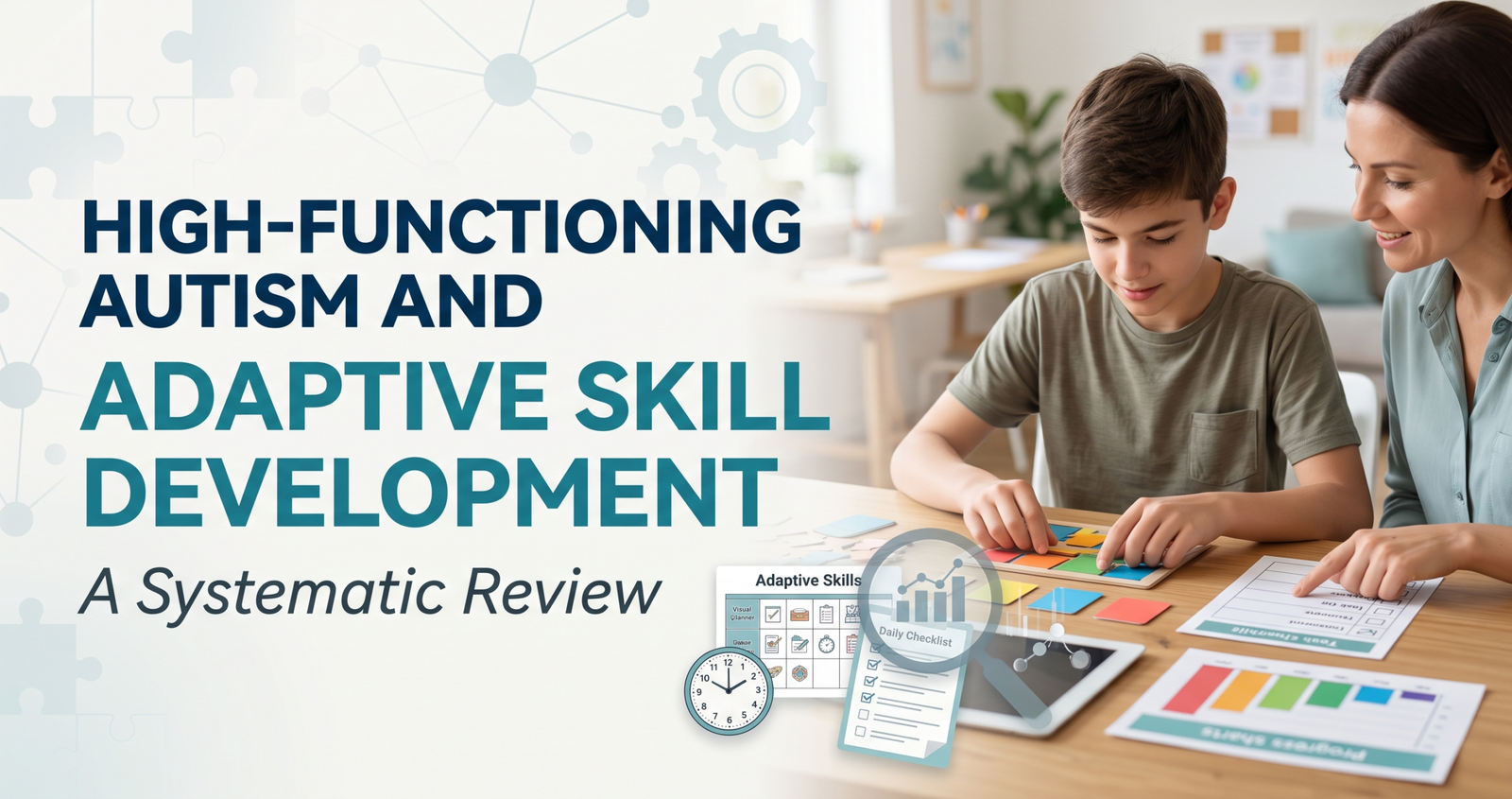
Comparing Skill Areas and Support Ideas
| Skill area | Typical difficulty | Support approaches discussed | Note |
| Daily living (hygiene, cooking, chores) | Planning, sequencing, sensory aversion | Visual schedules, task analysis, OT, practice at home | Teach in the real setting |
| Time and organization | Executive function differences | Planners, alarms, coaching, external structure | Individualize tools |
| Community skills (transport, shopping, appointments) | Sensory overload, anxiety, unpredictability | Gradual exposure, rehearsal, travel training | Build confidence stepwise |
| Social communication | Reading unspoken rules, initiating, repairing misunderstandings | SLP, social skills groups, self-advocacy training | Avoid forcing masking |
| Work and independence | Unwritten workplace norms, sensory environment | Job coaching, accommodations, clear expectations | Fit matters more than effort |
Practical Guidance for Families
Ask for adaptive behavior assessment, not only cognitive testing, because it often reveals needs that IQ scores don’t. Set goals around specific daily tasks, not vague independence. Teach skills early and gradually, and let the person practice, even when it’s slower, since doing things for someone can unintentionally block skill development. Plan the transition to adulthood well before school ends, including adult services eligibility, which varies by region. Look after sleep and mental health. And involve the autistic person in decisions as soon as they can participate.
Advantages and Limitations of the Evidence
We now understand that cognitive ability alone doesn’t predict daily functioning, that adaptive skills can develop with support, and that individualized, real-world teaching tends to be more useful than generic programs. The limitations are real: samples are often small and clinic-based, measures differ across studies, many rely on caregiver report, adults and women are underrepresented, and intervention studies vary in quality and in whether benefits carry over. Be cautious of tidy answers.
Expert Tips
Treat the person’s strengths and difficulties as coexisting, not contradictory. Ask what a skill is like on a bad day, not only a good one. Review supports at transitions. Check for treatable contributors when skills drop. Avoid the term “high-functioning” in your own writing, or explain its limits. And include autistic voices in anything you publish.
FAQs
What does high-functioning autism mean?
It’s an informal label, usually for autistic people with average or above-average intelligence or fluent speech. It isn’t an official diagnosis, and it can hide real support needs.
Do autistic people without intellectual disability still need support?
Many do, particularly with daily living, executive function, anxiety, and social demands. Needs vary widely.
Can adaptive skills improve?
Often, yes, especially with individualized support and practice in real settings, though progress is uneven.
Why is there a gap between IQ and daily skills?
Executive function, sensory differences, anxiety, social communication, and limited practice opportunities may all contribute, differently for each person.
Is “high-functioning” or “low-functioning” the right term?
Many prefer descriptions of specific strengths and support needs. The DSM-5-TR uses support levels instead.
Conclusion
So, what does the research say about high-functioning autism and adaptive skill development? That intelligence and daily functioning are different things, that adaptive skills can grow with the right support, and that a label implying someone is doing fine can make it harder for them to get help. The most useful move is to assess adaptive behavior directly, set specific goals, teach skills in the settings where they’ll be used, and keep listening to the person. If you’re a parent, ask your child’s team for an adaptive behavior assessment. If you’re a clinician, ask what a typical day looks like, not only what the person can do in your office.
Read More:
https://nurseseducator.com/didactic-and-dialectic-teaching-rationale-for-team-based-learning/
https://nurseseducator.com/high-fidelity-simulation-use-in-nursing-education/
First NCLEX Exam Center In Pakistan From Lahore (Mall of Lahore) to the Global Nursing
Categories of Journals: W, X, Y and Z Category Journal In Nursing Education
AI in Healthcare Content Creation: A Double-Edged Sword and Scary
Social Links:
https://www.facebook.com/nurseseducator/
https://www.instagram.com/nurseseducator/
https://www.pinterest.com/NursesEducator/
https://www.linkedin.com/company/nurseseducator/
https://www.linkedin.com/in/afzalaldin/
https://www.researchgate.net/profile/Afza-Lal-Din
https://scholar.google.com/citations?hl=en&user=F0XY9vQAAAAJ