

Discover Working Night Shift in the USA in 2026: Essential Safety Tips Every Female Nurse Must Know for Health, Security & Career Success. 2026’s top safety tips for female nurses working night shifts in the USA — protect your health, commute safely, and thrive on night duty with confidence.
Essential Safety Tips Every Female Nurse Must Know for Health, Security & Career Success: Working Night Shift in the USA in 2026
While night shifts in 2026 offer higher pay and often a calmer work environment, they require a proactive, evidence-based approach to addressing physical, psychological, and safety challenges. For nurses in the U.S., prioritizing health, safety, and career longevity is crucial for successfully managing the night shift.
Introduction: Why Night Shift Safety Is a Critical Issue for Female Nurses in 2024
Night shift nursing is the backbone of around-the-clock American healthcare — and female nurses, who represent nearly 87% of the US nursing workforce according to the Bureau of Labor Statistics (BLS), carry a disproportionate share of that burden. Working through the night offers real advantages: shift differentials, quieter floors, and greater clinical autonomy. But it also brings a distinct set of physical, psychological, and personal safety challenges that daytime nursing simply does not.
The American Nurses Association (ANA) has formally recognized night shift work as a significant occupational health concern, linking prolonged overnight schedules to increased risks of cardiovascular disease, metabolic disorders, sleep deprivation, and heightened vulnerability to workplace and commute-related safety incidents. For foreign-educated female nurses from Pakistan, India, the Philippines, and beyond — who may be navigating unfamiliar neighborhoods, new transit systems, and cultural adjustment simultaneously — these risks are compounded further. This guide is designed to give every female nurse working nights in the USA the practical, evidence-based safety framework she deserves.
Comprehensive Safety Tips for Female Nurses on Night Shift in the USA
Tip 1: Master Your Commute Safety Before Your First Night Shift Begins
The journey to and from the hospital in the early morning hours is one of the most vulnerable moments in a night-shift nurse’s day. Parking lots, bus stops, and train platforms between midnight and 5 AM present elevated personal safety risks, and female nurses — particularly those new to an American city — must plan their commute strategy before their schedule begins, not after.
If you drive to work, always park in well-lit, high-visibility areas as close to the hospital entrance as possible. Many hospitals offer dedicated staff parking with security escort services — use them without hesitation. Save your hospital’s security desk number in your phone and do not hesitate to request a security escort to your car after a long shift. If you use public transportation, study your route thoroughly during daylight hours first, identify the safest stops, and avoid isolated waiting areas.
Apps like Life360, be Safe, and Google Maps’ live location sharing allow you to share your real-time commute with a trusted contact every single night. For South Asian nurses especially, connecting with colleagues on the same shift for shared rides or parallel commutes creates both safety and community.
Tip 2: Protect Your Physical Health Against the Biological Demands of Night Work
The human body is governed by a circadian rhythm — an internal biological clock that regulates sleep, digestion, hormone release, and immune function on a 24-hour light-dark cycle. Working nights forces the body to function in direct opposition to this rhythm, and the health consequences for female nurses are well-documented and serious. Research published in the Journal of Occupational and Environmental Medicine confirms that female night-shift workers face elevated risks of breast cancer, type 2 diabetes, cardiovascular disease, and reproductive health disruptions compared to day-shift counterparts.
Protecting your physical health on nights starts with taking sleep seriously as a clinical priority — not a luxury. Create a sleep sanctuary at home: blackout curtains, white noise machines, a cool room temperature, and a firm no-interruptions policy during your designated sleep window. Aim for 7 to 9 hours of uninterrupted sleep after each night shift. Maintain a consistent sleep schedule even on days off to minimize circadian disruption. Prioritize nutrient-dense meals during your shift — avoid heavy, high-sugar foods at 3 AM, which spike blood glucose and deepen fatigue. Carry healthy snacks such as nuts, fruit, yogurt, and whole-grain crackers. Staying hydrated throughout the shift is equally critical, as dehydration significantly amplifies fatigue and cognitive impairment during overnight hours.
Tip 3: Prioritize Workplace Safety and Know Your Rights on the Night Floor
Night shift floors operate with reduced staffing, fewer supervisors, and less institutional oversight — conditions that can increase a female nurse’s exposure to workplace hazards including patient aggression, unsafe nurse-to-patient ratios, and in some cases, inappropriate behavior from colleagues or other staff. The ANA’s Bill of Rights for Registered Nurses explicitly affirms every nurse’s right to work in an environment free from abuse, harassment, and unsafe conditions, regardless of the time of day or shift.
Know your hospital’s zero-tolerance policies on workplace violence and sexual harassment, and know exactly how to report an incident. Keep your badge visible at all times and follow your facility’s protocols for handling aggressive patients — including calling for de-escalation support rather than managing threatening situations alone. Many US hospitals have adopted Workplace Violence Prevention programs, and night-shift nurses should proactively attend any available training. Build strong alliances with your night-shift colleagues. A culture of mutual awareness — where team members check on each other, communicate clearly during handoffs, and flag concerns promptly — is the most powerful safety system available on any overnight floor.
Tip 4: Guard Your Mental Health and Recognize the Signs of Night Shift Burnout
The psychological toll of sustained night-shift work is frequently underestimated, and female nurses — who often balance professional responsibilities with family caregiving roles at home — are particularly vulnerable to burnout, anxiety, and depression associated with overnight schedules. The American Psychological Association (APA) identifies chronic sleep disruption as a primary driver of mood disorders, and nursing-specific research consistently shows that night-shift nurses report higher rates of emotional exhaustion than their day-shift peers.
Recognizing the early warning signs of night shift burnout is essential to intervening before the condition becomes debilitating. These signs include persistent irritability, difficulty concentrating during shifts, emotional detachment from patients, increased error rates, physical exhaustion that sleep does not relieve, and a growing sense of dread before each shift begins. If you notice these symptoms in yourself, speak with your unit manager about schedule adjustments, reach out to your hospital’s Employee Assistance Program (EAP), and seek support from a mental health professional.
Many US hospitals offer free confidential counseling through their EAP — a resource far too few nurses utilize. For foreign-educated nurses who may lack family support networks nearby, online support communities and South Asian nursing groups on platforms like Facebook and WhatsApp can provide meaningful peer connection during difficult periods.
Tip 5: Build Smart Personal Safety Habits for Life Outside the Hospital
Safety for female night-shift nurses does not begin and end at the hospital door — it extends into every aspect of life organized around an inverted schedule. When the rest of the world is awake and active, the night-shift nurse is sleeping, and when she is working, the world is asleep. This inversion creates unique vulnerabilities that require deliberate, proactive management.
Inform trusted neighbors, family members, or friends of your night-shift schedule so that unusual activity — such as your car not being in the driveway during typical hours — is not misinterpreted or unnoticed. Install a quality door lock and consider a video doorbell for your home, as daytime deliveries and visits while you are sleeping can be disruptive and potentially unsafe.
Avoid posting your shift schedule or work hours publicly on social media platforms. When exercising or running errands after a night shift, avoid doing so alone in isolated areas during early morning hours when foot traffic is minimal. Many experienced night-shift nurses advocate for a brief “decompression walk” in a safe, populated area after arriving home as a healthy transition ritual — combining light exercise with a gradual mental shift from clinical alertness to restful relaxation before sleep.
Tip 6: Know the Legal Protections and Workplace Resources Available to You
Female nurses working night shifts in the United States are protected by a robust framework of federal and state labor laws that many internationally educated nurses are unaware of upon arrival. The Occupational Safety and Health Administration (OSHA) mandates that employers provide a workplace free from recognized hazards, which includes addressing documented risks of violence on overnight shifts. Title VII of the Civil Rights Act prohibits workplace discrimination and harassment based on sex, and the Pregnant Workers Fairness Act (PWFA), enacted in 2023, provides new protections for pregnant nurses that are particularly relevant to shift scheduling and physical workload accommodations.
If you experience workplace harassment, unsafe staffing conditions, or retaliation for raising safety concerns, you have the right to file a complaint with OSHA, the Equal Employment Opportunity Commission (EEOC), or your state’s labor board. Your State Nurses Association (SNA) is also an invaluable advocacy resource — most offer free guidance on workplace rights, unsafe staffing reporting, and nurse-specific legal protections. Understanding these protections is not just empowering — it is a professional responsibility that helps create safer workplaces for every female nurse who follows in your footsteps.
Conclusion: Every Female Night-Shift Nurse Deserves to Feel Safe, Healthy, and Valued
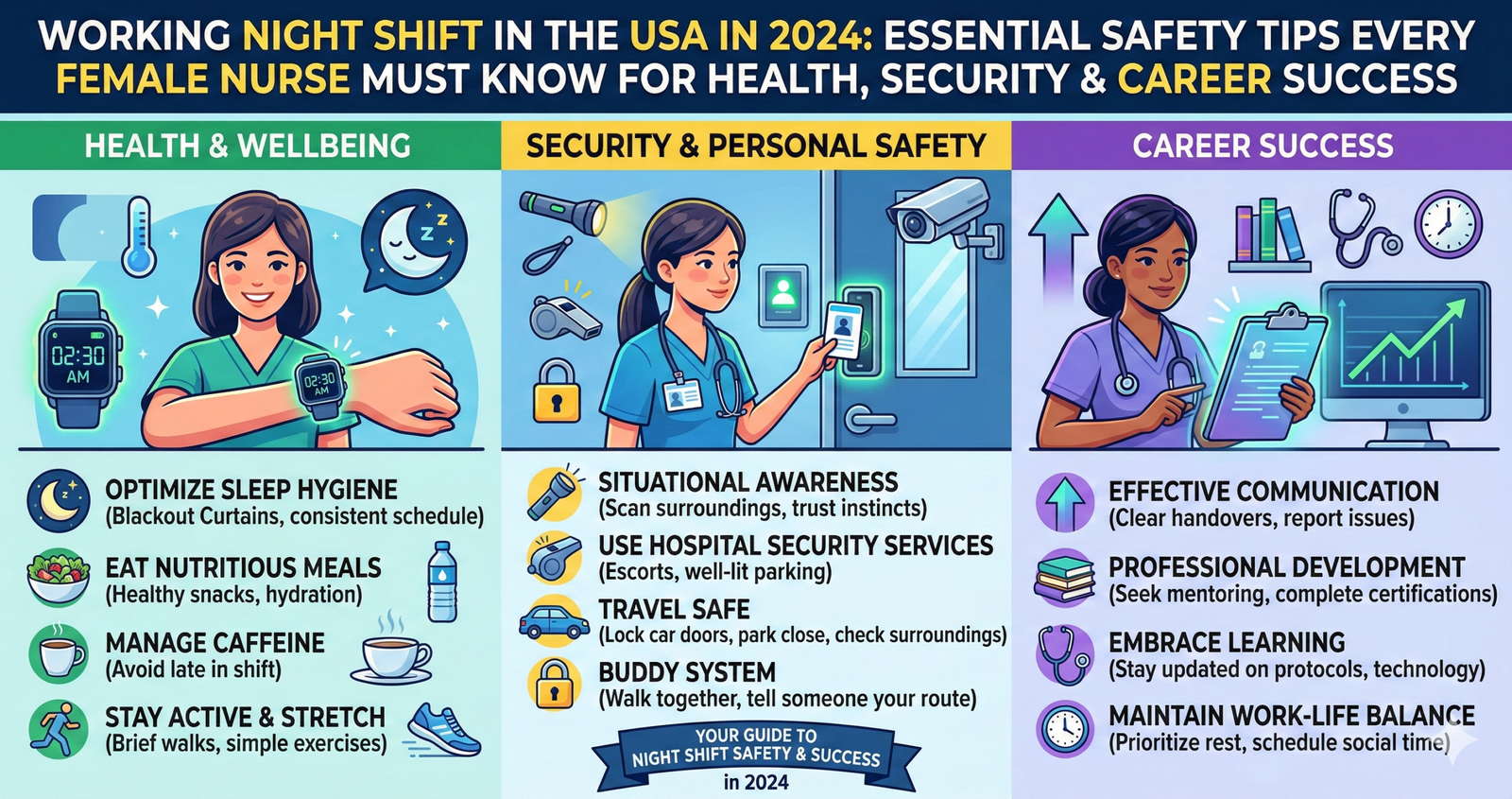
Night shift nursing is one of the most demanding and selfless commitments a healthcare professional can make, and female nurses who work through the night deserve comprehensive support — not as an afterthought, but as a foundational workplace standard. From mastering safe commute strategies and protecting circadian health to knowing your legal rights and building mental resilience, the tips outlined in this guide are drawn from evidence-based research, nursing professional standards, and real-world experience.
Nursing theorist Virginia Henderson defined the nurse’s unique role as assisting individuals to perform activities they would perform unaided if they had the necessary strength, will, or knowledge. That same principle applies here — every female nurse working nights deserves the knowledge, tools, and institutional support to protect herself while she protects others. Stay informed, stay connected, and never hesitate to advocate for your own safety with the same conviction you bring to advocating for your patients.
Safety and Personal Security (Travel and Hospital)
Nursing staff on the night shift often face staff shortages, limited resources, and increased security risks during the late hours of the night.
Safe Parking and Access: Park in well-lit and visible areas, preferably near hospital entrances. If parking is farther away, ask security personnel to escort you upon arrival or departure.
Safety While Driving: Avoid fatigue while driving (a significant risk) by listening to loud and engaging music, using the air conditioning, or, if possible, carpooling with trusted colleagues.
Carpooling Precautions: Before getting in, verify the driver’s identity and vehicle details (license plate, make), sit in the back seat, and share your trip details with someone you trust.
Trust Your Intuition: If you feel unsafe in a situation, area, or with a person, leave immediately and report it to security.
Peer System and Communication: Make sure at least one colleague knows your location. Keep your cell phone charged and within easy reach.
Health and Wellness: Maintaining Your Biorhythm
Working night shifts disrupts your natural sleep-wake cycle and increases the risk of chronic illnesses, such as cardiovascular problems and metabolic disorders.
Protect Your Sleep Environment: Use blackout curtains, earplugs, and a white noise machine to transform your bedroom into a calm oasis during the day.
Establish a Regular Routine: Maintain a regular sleep schedule, even on your days off, to regulate your internal clock.
Strategic Light Management: Wear sunglasses on your way home to reduce melatonin production in the morning light.
Nutrition: Avoid large, sugary meals between midnight and 6 a.m. to prevent energy crashes and metabolic disruptions. Instead, opt for protein-rich snacks (nuts, Greek yogurt, eggs) to keep your energy up.
Hydration: Drink 900 to 1500 ml of water during your shift to help prevent headaches and fatigue.
Professional Success and Development
Night shifts are more than just a job; they can be a stepping stone with unique benefits. Make the most of your downtime: Use quiet periods for professional development, such as reviewing hospital protocols, reading professional articles, or taking online courses.
Strengthen your relationships: The smaller staffing levels on night shifts foster greater team cohesion and better, often more direct, patient care.
Document efficiently: Complete your paperwork promptly so you don’t get stuck at the hospital after your shift and have to cut short your rest time.
Take advantage of shift bonuses: Starting in early 2026, night shift nurses in the U.S. typically receive higher pay ($2 to $5 more per hour) thanks to bonuses, making night shifts financially advantageous.
Set boundaries: It’s okay to decline invitations to get enough sleep; your health is more important than a conventional daily routine.
FAQs
What are the biggest health risks of working night shifts as a female nurse in the USA?
Research links prolonged night-shift work in women to increased risks of breast cancer, type 2 diabetes, cardiovascular disease, and sleep disorders. Female nurses can reduce these risks through consistent sleep schedules, healthy nutrition during shifts, and regular health screenings with their primary care provider.
How can foreign-educated female nurses stay safe during their commute after a night shift?
Foreign nurses should use hospital security escort services, share live location with a trusted contact via apps like be Safe or Life360, park in well-lit areas, study their transit routes during daylight, and connect with colleagues for shared commutes whenever possible.
What should a female nurse do if she experiences harassment or feels unsafe on a night shift?
She should document the incident immediately, report it to her unit manager and HR department, and if necessary, file a formal complaint with OSHA or the EEOC. Most US hospitals have zero-tolerance workplace violence policies and Employee Assistance Programs that provide confidential support.
Are there any legal protections specifically for nurses working night shifts in the United States?
Yes — OSHA mandates safe working conditions on all shifts, Title VII protects against sex-based harassment and discrimination, and the 2023 Pregnant Workers Fairness Act provides scheduling and workload accommodations for pregnant nurses. State Nurses Associations also offer advocacy and legal guidance specific to night-shift staffing and safety concerns.
Read More:
https://nurseseducator.com/didactic-and-dialectic-teaching-rationale-for-team-based-learning/
https://nurseseducator.com/high-fidelity-simulation-use-in-nursing-education/
First NCLEX Exam Center In Pakistan From Lahore (Mall of Lahore) to the Global Nursing
Categories of Journals: W, X, Y and Z Category Journal In Nursing Education
AI in Healthcare Content Creation: A Double-Edged Sword and Scary
Social Links:
https://www.facebook.com/nurseseducator/
https://www.instagram.com/nurseseducator/
https://www.pinterest.com/NursesEducator/
https://www.linkedin.com/company/nurseseducator/
https://www.linkedin.com/in/afzalaldin/
https://www.researchgate.net/profile/Afza-Lal-Din
https://scholar.google.com/citations?hl=en&user=F0XY9vQAAAAJ