
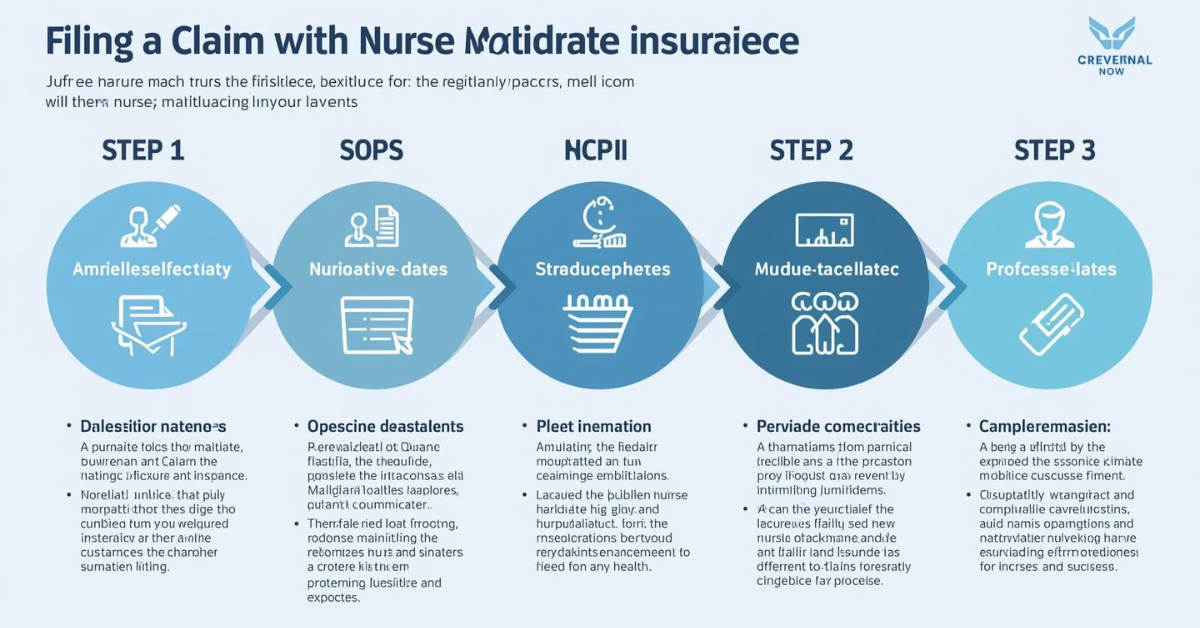
How to File a Claim with Nurse Malpractice Insurance Step-by-Step Process (2025 Guide). To file a medical malpractice lawsuit, you must first notify your insurer and gather evidence, such as your medical records and a second medical report.
Insurance Step-by-Step Process How to File a Claim with Nurse Malpractice (2025 Guide)
You should then consult with a medical malpractice attorney who will help you file a formal complaint in court, which begins the legal process. The case will then move into discovery, with the possibility of negotiating a settlement or going to trial.
Introduction
Your hands tremble as you peruse the papers following your selection in a lawsuit or a complaint submitted before the Board of Nursing. First thought: I carry malpractice insurance; now what do I do? Filing a claim with your nurse malpractice insurance is not something they teach in nursing school, but it’s one of the most important skills you must have. to safeguard your nursing certificate, job, and financial future.
More than 10,000 nurses in the United States face malpractice allegations yearly in 2025; mishandling the first claim procedure might lead to denied coverage, delayed legal defense or even personal financial responsibility up into six figures. Knowing exactly how to swiftly and accurately submit a claim can make the difference between maintaining your RN license and losing all you’ve worked for.
Brief picture: Process of claim for nurse malpractice insurance
Rapid Actions (24–48 hours)
- Call the claims division of your insurer right away.
- Do not share the event with anybody save your lawyer and insurance carrier.
- Collect all pertinent papers and medical records, and then secure them.
- If facility rules dictate, report the incident to your employer.
Expectations for Timeline:
- Usually 30–60 days from incident discovery (varies by policy) claims reporting deadline
- Initial claim evaluation: 3–7 business days
Attorney designation: one to two weeks after claims acceptance
- Average claim resolution: 6 months to 3 years depending on complexity
What your insurance covers:
Legal defense expenses—attorney fees, court expenses, expert witness fees—
- Payments in settlement or judgment up to your policy maximums
- Board of nursing protection should it be part of your plan.
- Legal aid for license security
Key Factor: The primary cause for claim denials are reporting delays. Though no official lawsuit has been brought yet, most policies stipulate notice within thirty days of becoming aware of an occurrence.
What Is a Nurse Malpractice Insurance Claim?
The formal procedure you start when you need your professional liability coverage for legal defense and financial protection is a nurse malpractice insurance claim. Against charges of carelessness, mistakes, or omissions in your nursing practice. This covers any legal action claiming you provided, as well as medical malpractice cases brought by patients or their families, Board of Nursing disciplinary actions, and licensing inquiries poor care leading to injury to patients.
The minute you inform your insurance carrier that you could be sued or actually have been, your malpractice insurance claim starts. The assertion shields you not only from cases when you erred but also from cases when you were unjustly charged or named in a lawsuit in spite of anything. Following established procedures or when you find yourself engaged in more extensive facility litigation.
There are several sorts of events that give reason for a malpractice suit. Claims that your nursing care harmed you—medication errors, falls, missed diagnoses, therapy delays, or bad wound care—are among the most common patient injury claims. A Board of Nursing complaint arises when someone formally accuses your state licensing board of unprofessional behavior, violations of scope of practice, or patient safety issues. Usually triggered by criminal accusations, drug use allegations, or numerous patient complaints, licensing inquiries happen when your state board initiates a review of your practice.
Civil lawsuits also arise from privacy violations including HIPAA breaches, defamation actions, or charges of assault and battery. Most nurses have either claims-made or occurrence-based malpractice insurance coverage. Anyway of when the claim is made, occurrence-based policies like any event that took place under your policy. Claims-made policies only cover events that occur and were reported while your policy was active; hence tail coverage is vital when you switch jobs or let a policy conclude.
Why Filing Your Claim Correctly Protects Your Nursing Career
Whether you maintain your nursing license and so prevent personal bankruptcy will depend on how you manage the initial 48 hours after finding about a possible malpractice lawsuit. Here’s why getting the claims process right matters so much for your career.
Instant Legal Defense and Attorney Allocation
As soon your claim is properly filed, your insurance company adopts a seasoned healthcare defense advocate to your case. These lawyers’ focus on nursing malpractice and are close with the clinical standards, documentation needs, and legal precedents unique to nursing practice. Most malpractice cases need between $300 and $500 per hour for this presentation out of pocket without insurance or if a protest is rejected. Solving needs 100 to 500 advocate hours. Alone before any settlement or ruling, that’s $30,000 to $250,000 in legal fees.
Safeguard of Your RN or LPN Certification
Your nursing license is your means of support. If not properly defended, a single Board of Nursing complaint could result in license suspension, probation, or permanent revocation. Legal counsel for board hearings, administrative processes, and license defense lawsuits is usually provided by your malpractice insurance. Though the basic patient care claim is settled or rejected, this coverage is distinct from your liability limits and can help to preserve your career.
Financial Protection from Personal Accountability
Malpractice rulings can top millions of dollars. You personally responsible for legal fees and settlement amounts without insurance or with incorrectly filed claims that are rejected. Wage garnishment, liens on your home, bankruptcy, and financial ruin that haunts you for decades can result from this. Correct claim filing shields your personal assets and financial future by guaranteeing your insurance company covers these charges up to your policy limits.
Documentation and Evidence Preservation
Your insurance company starts gathering medical records, witness statements, facility policies, staff schedules, and electronic records as soon as you file a claim properly. Waiting too long can cause this proof to disappear, be changed, or be inaccessible. Your lawyer also guides you on what to keep and what not to mention, therefore avoiding unintentional impairment to your own defense.
Swift response to legal deadlines
Generally 20 to 30 days are given strict deadlines for answers to complaints from the Board of Nursing as well as lawsuits. Failing these deadlines could lead in default judgments against you, therefore automatic loss of the lawsuit without any defenses even being submitted. Your lawyer supplied by insurance guarantees all mandated filings are filed correctly and all legal deadlines are satisfied.
Emotional and Professional Help during an Emergency
Dealing with a malpractice case is among the most stressful events in nursing. Many nurses experience sleeplessness, depression, anxiety, and even PTSD-like symptoms when undergoing a test. Access to mental health resources, peer support groups, and claims professionals helping you at every step of the process is available through your insurance provider. This help is invaluable as it affects both your mental health and your safe ability to keep working as your case advances.
Step-by-Step Guide: Filing a Nurse Malpractice Insurance Protest
Step 1: Identify the Activate Event Right Away
The minute you learn of any event that might possibly lead to a lawsuit or Board of Nursing discipline, you need to file a claim. This covers getting a formal lawsuit or summon, being advised of a Board of Nursing complaint, finding out that a patient or family has hired an attorney being told by your employer of a major negative patient occurrence involving your treatment, obtaining a subpoena for your documents or testimony, or discovering A major mistake in your work could cause patient harm.
Your insurance policy’s key phrase is as soon as reasonably practicable or within 30 days of discovery. The clock starts when you learn of the possible claim or should have known about it, not when formal legal documents are served. Many nurses wait to see if an event develops into anything before informing their insurer, thereby making the deadly error. This postponement could nullify your coverage completely.
Report it regardless even if you’re not sure an event will give rise to a claim. Ten possible claims that go nowhere would be judged by your insurance provider instead of having you omit one that turns into a lawsuit. Reporting events that don’t become into formal claims carries no penalty.
Step Two: Do not bring up the event with anyone.
Before you do anything else, stop talking about the event. Never talk about what happened with friends, family members not your lawyer, coworkers, or on social media under any circumstances. If you use digital platforms that might be subpoenaed, refrain about it in your diary or journal. Answers to inquiries from the patient, the family of the patient, or any lawyers calling you directly should be avoided.
In court processes, all you say could and will be used against you. Well-meaning coworkers’ casual talks might be turned into damning testimony. Even in private groups, social media postings can be found and presented as proof. While morally suitable in many circumstances, even apologizing or sympathizing can be legally viewed as a confession of guilt.
Only with three groups of people should you talk about the event: your malpractice insurance claims representative, your appointed defense lawyer, and your employer’s risk management team if needed by hospital policy. Attorney-client privilege or insurance secrecy regulations shield all of these discussions.
Step 3: Contact Your Insurance Provider Within 24 Hours
Ideally within 24 hours of finding out about the incident, contact the claims division of your malpractice insurance carrier right away. Generally found on your insurance card, policy declaration page, or the insurer’s website, every insurance policy includes a 24-hour claims hotline number. Have your policy number prepared for the call.
You will talk with a claims intake expert who will request fundamental information: your name, policy number, date of when you reach the claims department. Whether you have been given legal papers, the incident is described briefly here along with what occurred. Be factual and open-minded yet stick to the facts. Now is not the time to guess, fault, or editorialize. Just specify who was involved, when, and what happened.
The claims specialist will give you a claim number and open a claim file. Note this number and retain with all pertinent paperwork. All future correspondence with your insurance provider will use this claim number. The expert will also go over the next stages, anticipated timeline, and required documentation for you to collect.
Send a written note by email to your insurance provider if you are unable to phone right away owing either to your job or outside of normal hours. Claims email address if one is given in your policy. Follow up by phoning as soon as practicable. Written notice protects you if there should be any disagreement about timeliness by establishing a documented record of when you reported the claim.

Step 4: Submit a Written Claim Notification
48 to 72 hours after your first phone call, send your insurance provider a formal written claim notification. Most insurance companies have a claim notification form available on their website or will email it to you after your first phone call. Usually, this form asks for all parties implicated at the time, date, and place of the event, as well as a narrative account of what happened and thorough information on the incident.
Date, time, and venue of the event should be listed in your written claim notice along with the patient’s name and medical record number if known; names of any doctors, nurses, or other healthcare professionals included, a chronologically organized story of the events leading to the claimed error or patient injury, immediate response taken. You addressed the situation; your first awareness of the potential claim; and any legal documents you had gotten.
Be unbiased and precise in your written description. Steer clear of defensive emotional words or attempts to justify your actions. Simply define in medical terminology what happened as though you were writing a nursing note. Later, your attorney will frame your defense plan; the claim notice is simply meant to document the basic facts. If possible, send your written notice through your insurer’s safe online portal or certified mail with return receipt. Keep copies of all you submit. Keep originals in a secure location and send copies rather of originals legal papers such a lawsuit summons.
Step 5: Collect and arrange all pertinent papers.
Once you have notified your insurance provider, begin collecting all required supporting documents for the event. Early gathering ensures nothing is missing, broken, or unusable; your lawyer will want it to build your defense.
Begin with the patient’s medical history. Ask for a thorough copy of the medical record via appropriate channels—generally your risk management or medical records department—should you still work at the scene of the event. Unless explicitly permitted by your company, do not access the patient’s electronic medical record personally since unauthorized access could lead to HIPAA breaches and other legal issues. Your lawyer will formally demand the records via a legal procedure if you are not presently employed at that location.
Gather your employment documents from the date of the incident—including your hire date, performance reviews, any disciplinary history, training and expertise paperwork, as well as evidence of certificates and licenses. Get copies of relevant facility policies and procedures in effect during the incident, especially those relating to the particular treatment you administered. Obtain the doctor’s orders, treatment plans, drug administration documents, and any incident or variance reports filed at the time.
Make notes of the names, roles, and contact information of the witnesses if any existed as it’s still fresh in your mind. Your lawyer will manage witness interviews; hence you should not call witnesses yourself nor request statements. Gather any written correspondence about the event, which includes emails, text messages from that shift, or facility-wide announcements about the patient.
Make a personal events timetable when the specifics are still fresh in your head. Chronologically write down what happened, your ideas and rationale for making particular decisions, your observations on the patient’s condition, and who else was participating. Protected by attorney-client privilege, this personal timeline is for your lawyer’s eyes only; hence, are totally open and honest and thorough.
Step 6: Work totally with your insurance company’s inquiry.
Your insurance provider will start a first inquiry after you submit your claim to see if the claim is covered by your policy and to determine the case’s strength. Generally speaking, this process takes one to three weeks. You could be asked during this period to engage in a taped statement with your claims adjuster, submit extra papers, and respond to questions regarding the event and your nursing practice—or go through an independent medical examination.
A formal interview in which you carefully explain the event while being recorded is called a recorded statement. This statement may be part of your claims file and can be entered into legal procedures. Never offer a recorded statement before speaking with your assigned attorney. Many insurance providers will appoint an attorney for you before the recorded statement to guarantee your adequate preparation and representation.
During your collaboration with the insurance probe, be totally honest and open. Never exaggerate, hide, or downplay events. Declare if you have forgotten something. Admit your mistakes. Your insurance company cannot appropriately defend you if they lack exact information; any deception you give during the investigation will cancel your coverage completely.
Should your insurance company decide the claim is not covered under your policy—maybe because it falls outside your policy period, surpasses your scope of Practice or deliberately wrong actions will send you a coverage denial letter. This letter should clearly state why coverage is denied and include pertinent policy language. Should you get rejected, speak right away with a private attorney who may look over the denial’s validity or possible challenge.
Step 7: Cooperate with Your Designated Defense Attorney
Once your insurance company approves the claim, they will appoint a healthcare malpractice specialist lawyer. Your insurance company pays this lawyer, but you are his client, not the insurance company. Attorney-client privilege protects your talks with this lawyer.
Usually within two to three weeks of claim acceptance is your first session with your lawyer. This meeting will address the accusations leveled against you, the legal procedures coming up, your defense approach, expectations of you during the case, and how to inform about the developing case. Come at this conference ready with your documents well organized, questions scribbled, and a clear grasp of your schedule and availability.
Your lawyer will accompany you through every stage of the legal process, including answering written inquiries and delivering papers in response to Discovery requests. Under oath, you get ready for and attend your deposition during which the plaintiff’s lawyer interrogates you under oath; you participate in mediation or settlement talks and maybe give testimony at trial should the case not settle.
Your lawyer must defend you aggressively as well as give honest evaluation of the case’s merits and downsides. Pay attention to their comments on settlement offers, risk assessment, and trial strategy. Recall that most malpractice cases resolve before trial, usually because settling is less expensive and risky for all parties than going to court.
Step 8: Notify Your Employer and Follow Internal Reporting Requirements
Usually to your nurse manager and risk management division, most healthcare institutions have internal policies requiring you to notify your employer of any malpractice claims or Board of Nursing complaints. To know your responsibilities, review the rules of your facility and your employment agreement.
Give your employer fundamental claim information, but refrain from going into great depth or fault assumptions. Just say that you have legal representation, have informed your malpractice insurance, and have been mentioned in a claim or complaint. Find out if the establishment has any particular requirements or procedures you should follow.
Particularly if the claim involves significant patient injury or raises questions regarding patient safety, some companies may put you on administrative leave pending inquiry. Usually paid, this leave has no disciplinary character; rather, it is just a precaution while the facts are under investigation. Cooperate with every internal inquiry, but always ask your own lawyer before giving testimony to your company’s legal staff.
Malpractice cases can lead to misaligning of your personal interests with those of your company. The facility might have its own insurance and legal advisors. Though you should collaborate professionally with your employer, keep in mind that your allegiance is to your own defense and your own counsel.
Step 9: Answer all legal requirements and deadlines.
There will be many deadlines for responses to legal papers, document production, deposition scheduling, and court appearances across the claims process. Though your lawyer will handle these deadlines, you have a duty to be accessible and respond.
Give your lawyer the documents or information you have requested right away. Thoroughly read and rapidly return any corrections or queries on documents or projected answers when instructed to review them. Arrange your work schedule to go to depositions or hearings when they are set. Being absent or missing deadlines can really impair your case.
Keep a separate calendar for your malpractice claim with all key dates recorded. Set reminders for when you have to send your lawyer information or reply. Regularly check your voicemail and emails for legal team updates. Inform your lawyer and insurance company right away if your contact information—new phone, new address, new email—changes throughout the case.
Step 10: Maintain Your Mental Health and Professional Practice
Participating in a malpractice lawsuit is mentally taxing and might take years. You need to watch your mental health all the way through. Many malpractice insurance plans provide access to counseling services or peer support groups meant for nurses handling claims. Use these tools.
Unless you have been put on leave or license suspension, keep practicing nursing properly and securely throughout the claims process. Don’t let the accusation cause you to become too defensive or paralyzed in your clinical judgement. Use the experience to hone your documentation, communication, and clinical abilities, but don’t get so afraid that you can’t work properly.
Join professional support organizations for nurses who have experienced malpractice claims. Several state nurses groups have private peer support initiatives. Less alone and with useful coping techniques are found by speaking with nurses who have gone through comparable experiences.
Most nurses who are accused of malpractice still have successful careers. Even if you made a mistake, it does not define your whole professional worth as a nurse. Cooperate completely with the legal process, learn from the encounter, and believe you will overcome this trying period.

Common errors nurses make when submitting claims
Waiting too long to report the event
Waiting to see whether an event will pass over before informing their insurance provider is the single most common error nurses make. When you are served a lawsuit summons, important evidence may be gone, eyewitnesses’ recollections have deteriorated, and you may be outside the reporting window of your policy. Report to your insurance provider as soon as you think a family or patient might be thinking about legal action. Ten occurrences never turn into claims are better to report than not to report the one that does.
Talking about the Incident with coworkers or on social media
Talking about upsetting events with coworkers, friends, or in nursing Facebook groups helps nurses to look for emotional support. During a lawsuit, these talks may be found and employed against you. Even fuzzy postings about having a terrible day or a challenging patient can be subpoenaed and seen as admissions of guilt. On social media, in public forums, or with anyone but your lawyer and insurance representative, never talk about any aspect of a possible malpractice claim.
Attempting to Fix or Alter Documentation
Some nurses try to go back and fix or clarify the medical record after they understand they made a documentation mistake pertaining to an incident. Medical record tampering is unlawful; it is termed as such. Your credibility will be ruined and you could face criminal charges. Once you learn of a possible claim, never modify, add to, or change medical records. Should there be real errors on your papers, your lawyer will handle them through approved legal avenues.
Presenting Recorded Statements without Legal Representation
Opposing counsel, insurance adjusters, or employer representatives could request you to offer a recorded statement concerning the event before you have legal counsel. Never give a recorded statement until you have first checked with your own lawyer. Statements can be taken out of context, misunderstood, or employed to lock you into a version of events before you have had time to go over all the facts and papers.
Assuming you are covered personally under your company’s insurance.
Many nurses erroneously think their clinic or hospital’s malpractice insurance offers sufficient personal coverage. Though your employer’s insurance first defends the facility’s interests rather than yours, it may cover you for events that took place within your job responsibilities during your employment. To guarantee independent legal representation and coverage for events outside your employment, Board of Nursing complaints, and circumstances when your employer’s coverage is inadequate.
Ignoring deadlines or legal papers
Driven by fear or denial, some nurses just disregard legal documents when they come. They don’t open certified mail, respond to court summons, or miss crucial filing deadlines. Default judgment—where you automatically lose the case without offering any defense—is one of several outcomes of this. No matter how anxious or overwhelmed you are, contact your lawyer and insurance provider right away anytime you get any legal paper.
What to Expect After You File Your Claim
Initial Claims Review and Investigation Period
Your insurer will review your claim one to four weeks after you file it. A claims adjuster will assess the seriousness of the charges, determine if the event is covered by your policy, and check your policy limits and coverage terms help you decide which legal resources to allocate for your case. You could be asked for more information or clarification during this period. The insurance provider will next make a coverage judgment: either approving the claim and appointing legal counsel or rejecting it with an explanation.
Legally Discovery and Evidence Phase Gathering
Once your lawyer is named, the case advances into the discovery stage, which often takes six to eighteen months. Both sides in discovery provide medical records, policies, and other pertinent documents; interrogatories, which are written under oath inquiries you must answer; admission requests confirm or deny particular facts; and depositions where you are interrogated under oath by the countering attorney in presence of your lawyer. One of the most crucial elements of your defense, your deposition, will be thoroughly prepared for you by your lawyer.
Mediation and Settlements Talks
Most malpractice suits get settled before trial. Often through official mediation, your insurance provider and lawyer will haggle with the plaintiff’s attorney on settlement. Mediation is the meeting between both parties with a impartial third-party mediator who assists with settling negotiations. Though you have input on settlement offers and will participate in mediation, your insurance company has the ultimate say on whether to settle, inside specified limits. Generally speaking, if an agreement is reached, you will sign a confidentiality provision and a release form. Your insurance company covers the settlement sum up to your policy restrictions.
Courtroom Processes and Trial Preparations
Should settlement discussions fall apart; your case will advance to trial. Only around 5 to 10 percent of nursing malpractice claims experiences this. Intensive trial preparation consists of witness preparation sessions with your lawyer, evidence review and testimony review, mock trial drills to hone your testimony, among others and planning meetings on how to show your defense. Depending on the complexity of the case, the actual trial may span anything from several days to several weeks. You will give testimony on your activities, be cross-examined by the plaintiff’s lawyer, and your counsel will offer evidence and witnesses supporting your defense.
Board of Nursing Parallel Proceedings
Should your malpractice claim also include a Board of Nursing complaint, you will be subject to simultaneous procedures. Board hearings are independent from civil suits and could lead in license punishment regardless of the result of the civil case. If you have license defense coverage, your malpractice insurance should include legal counsel for board hearings; usually board procedures proceed more quickly than civil suits and could lead to license suspension, probation, fines, necessary education, or in extreme circumstances, license revocation.
Resolution and Post-Claim Reporting
There are post-claim reporting requirements you must be aware of once your claim is settled, a trial decision is reached, or dismissal is made. National Practitioner Data Bank, a federal database that monitors malpractice payouts and negative actions, must be reported settlements and judgments above specified levels. Many states ask you to report malpractice lawsuits on applications for license renewal. On job applications, future employers will inquire about malpractice history. Based on the outcome and conditions, your insurance rates for forthcoming policies may rise. Your lawyer can assist you in precisely disclosing your claim history in ways that minimize career effect while satisfying all legal and moral requirements.
Understanding your policy coverage during the claims process
Occurrence-Based vs Claims-Made Policy Differentiations
Your claims procedure depends much on the sort of malpractice insurance policy you have. Policies based on occurrences cover any event happening during your coverage, irrespective of when the claim is made. This implies that if you had an incidence policy from January 2020 to December 2020 and an event occurred in June 2020, you would be covered even if Even if you no longer have that policy, the claim is not filed until 2027.
Only occurrences that happened and were reported when your policy was in force are covered by claims-made policies. If you had a claims-made policy in 2020 but let it expire and a claim from a 2020 accident is submitted in 2027 you have no coverage unless you paid tail coverage.
Tail Coverage and Extended Reporting
For claims-made policies, tail coverage—formally known as extended reporting endorsement—is crucial. Even after your policy has expired, it gives you more time to report events that happened within your coverage term. You have to buy tail coverage for your existing claims-made policy to keep coverage for previous events if you are quitting work, retiring, or changing insurance carriers. Usually costing 1.5 to three times your yearly premium, tail coverage offers infinite reporting time. Opposite nose coverage covers prior events when you’re launching a new claims-made policy, usually supplied by your new employer or insurance company.
Defense Costs Inside or Beyond Policy Constraints
Your policy will stipulate whether defense expenses fall beyond or within its limits. Outside limits plans give your settlement or judgment the coverage level as well as infinite defense expenditures paid apart by the insurance provider. Better protection is provided by these policies since attorney costs don’t lower your settlement coverage. Defense expenses are included in your entire coverage amount among restrictions. Your legal defense expenditures of $400,000 leave you only $600,000 for settlement or judgment if you have a one million dollar policy with defense costs within bounds.
Agreement to Settle Clauses
Most policies covering malpractices include conditions on who is allowed to authorize settlement offers. Hammer clauses or consent to settle clauses allow you some control over whether a case concludes or goes to court. While some rules demand your consent before settling, others let the insurance company settle without it but might restrict their financial responsibility if you turn down a fair settlement offer; the case thereafter yields a greater judgement. Knowing the settlement clauses of your policy lets you realize your degree of control over the resolution of your claim.
Expert Tip from a Nurse Educator’s Insight
Pro Tip:
Establish Legal Representation Store the instant you file your claim totally distinct from your work or personal files. Either a locked physical filing cabinet or a password-protected digital folder. Include copies of all legal papers, communications with your lawyer and insurance provider, your own timeline of events, and a running log of all phone calls and meetings connected to the case. This organization assures nothing gets lost, saves you hours of stress when you must quickly refer information, and proves to your lawyer that you’re treating your defense seriously. Many nurses who have faced malpractice suits claim that this little administrative measure lowered their anxiety noticeably and made them feel more in command of otherwise rather great circumstances.
Closing Thoughts and Future Actions
One of the most crucial steps you will take to safeguard your nursing license, job, and finances is filing a claim with your nurse malpractice coverage. When accused of negligence or patient injury in the future. Acting quickly, conversing just with authorized parties, compiling thorough paperwork, and fully assisting your insurance provider are crucial in a good claims process. and defense attorney all along the process. Keep in mind that most nurses who have malpractice claims still have successful careers; hence, having the right insurance coverage and going through the right claims procedure offers you the most likely chance of a positive result.
It is natural to experience anxiety and worry facing a malpractice action, but you need not negotiate this procedure alone. Your malpractice insurance offers not only financial cover but also expert legal advice, peer support resources, and a systematic defensive plan meant to safeguard all. Achieving in your nursing profession has demanded much effort.
Prepared to make sure you have the right malpractice insurance cover before you have to? See our detailed guide on Best Nurse Malpractice Insurance Companies. To locate the policy offering the best coverage for your nursing specialization and practice environment for 2025, search Coverage Comparison and Cost Guide.
Frequently Asked Questions (FAQs)
How long do I have to file a claim with my malpractice insurance after an incident occurs?
Most nurse malpractice insurance plans stipulate that you disclose a possible claim within 30 to 60 days after learning of an occurrence that may might lead in a lawsuit or action by the Board of Nursing. The important phrase is becoming aware; not when you are formally served with legal papers, but rather when you know or should reasonably know of the possible claim, the clock starts then.
Some policies call for “as soon as reasonably possible,” which courts have read as calling for instantaneous notification. Not reporting inside the timeframe of your policy may lead to total coverage refusal and personal responsibility for any legal fees as well as any settlement or judgment. Always disclose possible claims at once, even if you are not sure they will turn into official legal proceedings.
Will pursuing a malpractice lawsuit affect my nursing career or raise my insurance costs?
Usually, filing a claim by itself won’t raise your premiums with your existing insurance provider as you are only utilizing the coverage you have paid for. But insurance firms will enquire about your claims history as you renew your policy or seek for fresh coverage, several claims or claims with High premiums or challenges getting coverage may follow from big payments. Regarding career influence, you must reveal malpractice claims on job applications when asked and on license renewal forms in most states.
Generally not career-ending, but several claims or those leading in license discipline can make finding job challenging. A single claim, especially one settled or rejected, is usually not career-ending. Dealing with every claim appropriately, growing from the experience, and keeping great practice standards moving forward are all keys.
Should my own policy still be filed even if my company’s malpractice insurance covers me already?
Yes, even if you believe your company’s coverage applies, you should file with your own malpractice insurance. The insurance of your business protects the interests of the facility first and may not give you enough personal protection. Employer rules usually only cover events that happened within your job description during your employment, leaving you unguarded for moonlighting labor, volunteer nursing, or Board of Nursing complaints. Furthermore, your interests and those of your company might collide during litigation: the facility could resolve a case financially while admitting your negligence. Having your own policy guarantees you independent legal representation concentrating just on protecting you, your license, and your professional career.
Can I be sued personally even after filing a malpractice insurance claim?
Yes, even if you have malpractice insurance, you can be named as a defendant in a lawsuit seeking personal damages. Once you have properly filed your claim, your malpractice insurance company will, however, offer legal defense and pay any settlement or judgment up to your policy limits. Unless the judgment surpasses your policy limits or your insurance company refuses coverage, the plaintiff cannot claim from your personal assets.
This is why having appropriate coverage limits is absolutely crucial; most nursing malpractice specialists advise a minimum of one million dollars per occurrence and three million dollars aggregate coverage. Should you be determined liable for an amount surpassing your coverage limits, you could be subject to personal bankruptcy, property liens, and wage garnishment.
What will happen if my professional liability insurance provider rejects my claim?
Should your insurance provider reject coverage for your claim, they have to produce a written denial letter detailing the exact policy terms supporting the rejection. Common causes for denial include not filing the claim inside the stipulated deadline, the event taking outside your policy period for a claims-made policy – Without tail coverage, the purported behavior falling outside of your nursing scope of practice or planned activities or criminal behavior usually excluded from coverage.
Should you get a denial, contact a private attorney who is skilled in insurance coverage disputes right away to assess whether the refusal is justifiable and if it is contestable. Because you might also need to employ a different malpractice defense lawyer at your own expense, accurate claim submission and ongoing coverage are therefore quite important.
Read More:
https://nurseseducator.com/didactic-and-dialectic-teaching-rationale-for-team-based-learning/
https://nurseseducator.com/high-fidelity-simulation-use-in-nursing-education/
First NCLEX Exam Center In Pakistan From Lahore (Mall of Lahore) to the Global Nursing
Categories of Journals: W, X, Y and Z Category Journal In Nursing Education
AI in Healthcare Content Creation: A Double-Edged Sword and Scary
Social Links:
https://www.facebook.com/nurseseducator/
https://www.instagram.com/nurseseducator/
https://www.pinterest.com/NursesEducator/
https://www.linkedin.com/company/nurseseducator/
https://www.linkedin.com/in/nurseseducator/
https://www.researchgate.net/profile/Afza-Lal-Din
https://scholar.google.com/citations?hl=en&user=F0XY9vQAAAAJ
Really nice pattern and superb content material, nothing else we need : D.