
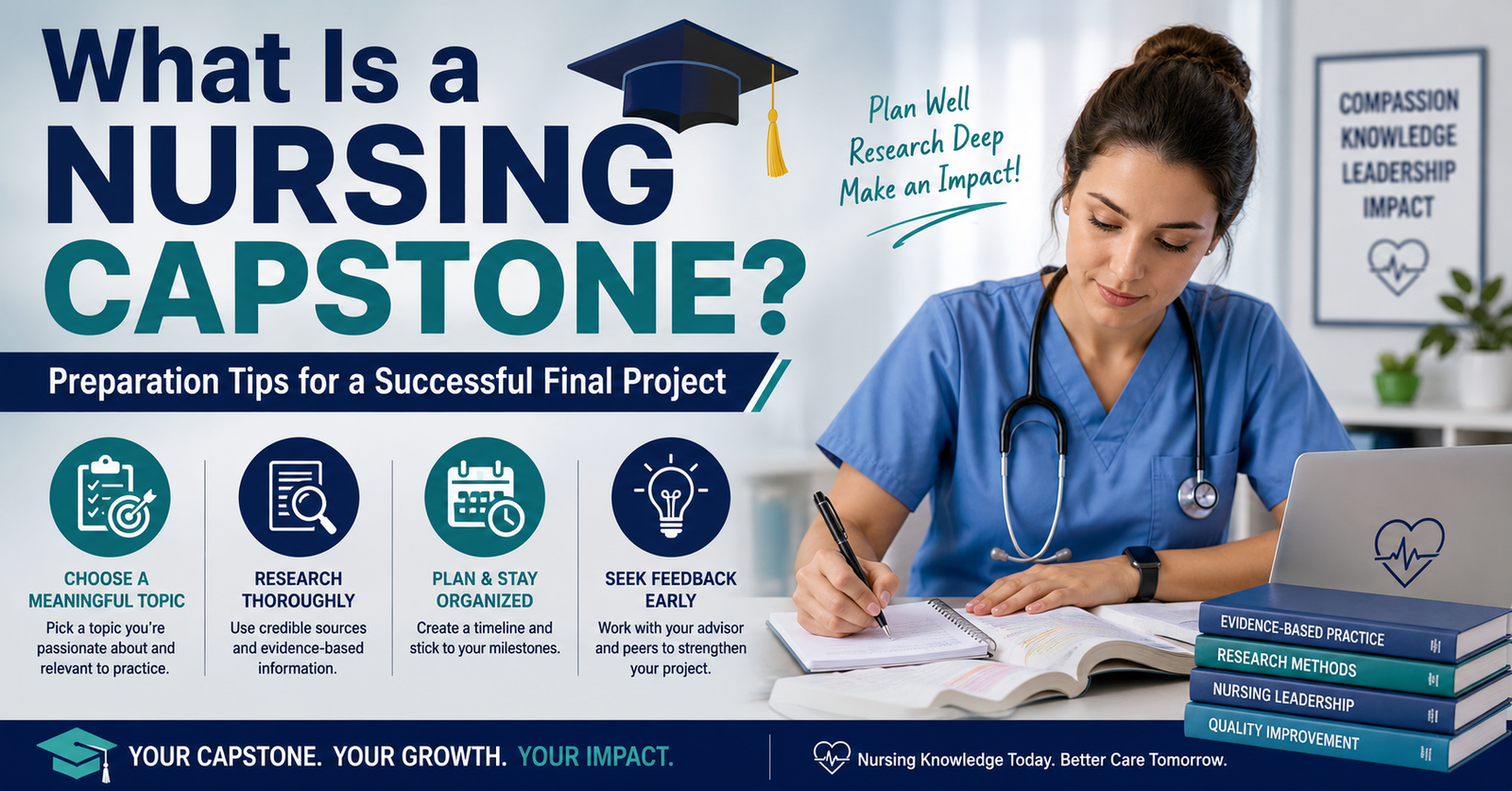
Discover What Is a Nursing Capstone? Preparation Tips for a Successful Final Project. What a nursing capstone is and learn practical preparation tips to complete your final project with confidence.
Preparation Tips for a Successful Final Project: What Is a Nursing Capstone?
Introduction
Understanding what is a nursing capstone is essential as you approach the final stretch of your nursing program. This culminating project brings together everything you’ve learned throughout your coursework and clinical rotations into one comprehensive body of work.
For many nursing students, the capstone feels overwhelming at first glance. However, with the right preparation strategy, it becomes a genuine opportunity to demonstrate your clinical growth and professional readiness.
Defining the Nursing Capstone Project
Before diving into preparation strategies, it’s important to understand exactly what this project entails.
The Purpose Behind the Capstone
A nursing capstone is a culminating academic project that demonstrates your ability to apply theoretical knowledge to real-world clinical practice. Essentially, it serves as proof that you’re prepared to transition from student to practicing nurse.
Common Capstone Formats
Depending on your program, a capstone may take the form of a research paper, quality improvement project, evidence-based practice initiative, or clinical practicum. Some programs also require a formal presentation or defense in front of faculty.
How It Differs From a Thesis
Unlike a traditional thesis, which emphasizes original research, a nursing capstone typically focuses on applying existing evidence to solve a practical clinical problem. This distinction matters because it shapes how you approach topic selection and methodology.
Choosing the Right Capstone Topic
Your topic choice significantly influences how smoothly the rest of your project unfolds.
Aligning With Your Clinical Interests
Selecting a topic connected to a specialty you’re passionate about, such as pediatrics, critical care, or mental health, makes the research process far more engaging. Additionally, this alignment can strengthen your resume if you plan to pursue that specialty after graduation.
Ensuring the Topic Is Researchable
Before committing, confirm that sufficient peer-reviewed literature exists to support your chosen topic. A topic that’s too narrow or too new may leave you struggling to find adequate evidence.
Getting Faculty Approval Early
Most programs require formal approval of your capstone topic before you begin substantial work. Submitting your proposal early gives you time to make adjustments based on faculty feedback.
Structuring Your Capstone Project
A well-organized structure keeps your project focused and prevents last-minute scrambling.
Introduction and Problem Statement
Your introduction should clearly identify the clinical problem or gap in practice your capstone addresses. A strong problem statement sets the tone for the entire project and guides your research direction.
Literature Review Best Practices
Your literature review should synthesize current, credible research rather than simply summarizing individual studies. Focus on peer-reviewed sources published within the last five to seven years to ensure clinical relevance.
Methodology and Implementation
Whether your capstone involves a quality improvement initiative or an evidence-based practice change, clearly outline your methodology step by step. This section should demonstrate that your approach is both feasible and grounded in established nursing research.
Practical Preparation Tips for Success
Beyond structure and topic selection, practical habits make a significant difference in capstone outcomes.
Start Early and Build a Timeline
Breaking your capstone into smaller milestones prevents the overwhelming crunch many students experience near deadlines. Set target dates for your proposal, literature review, data collection, and final draft.
Communicate Regularly With Your Advisor
Your faculty advisor is a valuable resource throughout the process, not just at the beginning. Scheduling regular check-ins ensures you catch potential issues before they become major setbacks.
Keep Meticulous Documentation
Maintain organized records of your sources, data, and revisions throughout the project. This habit not only supports academic integrity but also saves significant time during the final writing and citation stages.
Presenting and Defending Your Capstone
For many programs, the final step involves presenting your work to faculty or peers.
Preparing Your Presentation
Focus your presentation on the clinical significance of your findings rather than restating every detail of your literature review. Visual aids, such as clear charts or process diagrams, can strengthen audience understanding significantly.
Anticipating Questions
Faculty often ask about your methodology choices, limitations, and how your findings could be applied clinically. Practicing responses to likely questions beforehand builds confidence going into your defense.
Managing Presentation Anxiety
It’s completely normal to feel nervous before presenting a project you’ve invested months into. Rehearsing multiple times, ideally in front of peers, can significantly reduce anxiety and improve delivery.
Conclusion
Understanding what a nursing capstone is and preparing strategically can transform a stressful requirement into a genuinely rewarding capstone experience. By choosing a meaningful topic, structuring your project thoughtfully, and building strong habits around documentation and communication, you’ll set yourself up for a successful final presentation.
If this guide helped clarify your capstone journey, share it with classmates preparing for their own final projects, leave a comment about your chosen topic, or explore more of our resources to support your path toward graduation.
FAQs
What is a nursing capstone project?
A nursing capstone is a culminating academic project that demonstrates a student’s ability to apply theoretical nursing knowledge to real clinical practice. It often takes the form of a research paper, quality improvement project, or evidence-based practice initiative.
How long does a nursing capstone project typically take?
Most nursing capstone projects span an entire semester, though timelines vary by program. Starting early and building a structured timeline helps prevent last-minute stress.
Do all nursing programs require a capstone project?
Most BSN, MSN, and DNP programs require some form of capstone or culminating project before graduation. However, specific requirements and formats vary significantly between institutions.
What makes a strong nursing capstone topic?
A strong nursing capstone topic aligns with your clinical interests, has sufficient supporting research available, and addresses a genuine gap or problem in nursing practice. Getting early faculty approval also ensures your chosen topic meets program requirements.
Read More:
https://nurseseducator.com/didactic-and-dialectic-teaching-rationale-for-team-based-learning/
https://nurseseducator.com/high-fidelity-simulation-use-in-nursing-education/
First NCLEX Exam Center In Pakistan From Lahore (Mall of Lahore) to the Global Nursing
Categories of Journals: W, X, Y and Z Category Journal In Nursing Education
AI in Healthcare Content Creation: A Double-Edged Sword and Scary
Social Links:
https://www.facebook.com/nurseseducator/
https://www.instagram.com/nurseseducator/
https://www.pinterest.com/NursesEducator/
https://www.linkedin.com/company/nurseseducator/
https://www.linkedin.com/in/afzalaldin/
https://www.researchgate.net/profile/Afza-Lal-Din
https://scholar.google.com/citations?hl=en&user=F0XY9vQAAAAJ